Bra fitting blunders: common mistakes and how to avoid them
A bra can be a wonderful thing when it fits properly. When it doesn’t, it can become a tiny daily villain: digging, slipping, gaping, poking, riding up and generally making itself known at the worst possible moment.
The tricky part is that many people do not realise their bra is the problem. They assume bras are just meant to be uncomfortable, or that they are “between sizes”, or that adjusting the straps for the fourth time before lunch is simply part of being alive.
Good news: it doesn’t have to be that way. Here are some of the most common bra fitting mistakes – and how to avoid them.
Mistake 1: Wearing the band too loose
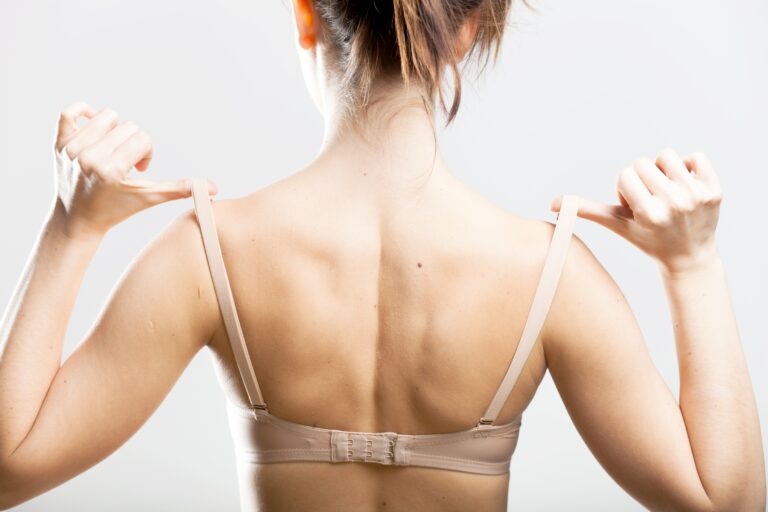
This is one of the biggest fit issues. The band should do most of the supporting work, not the straps. If your band is too loose, it can ride up at the back, leaving your bust unsupported at the front.
A good band should sit level around your body and feel firm but comfortable. You should be able to move, breathe and sit normally, but it should not shift around.
If your bra feels unsupported and you keep tightening the straps, check the band first. The straps may not be the real problem.
Mistake 2: Tightening the straps too much
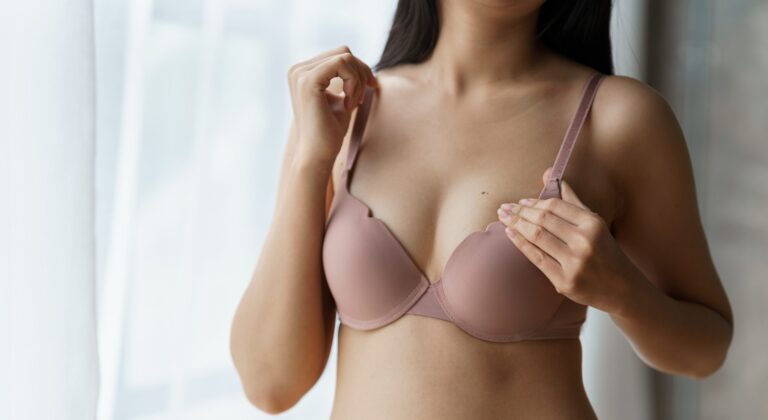
Straps are there to help position the cups, not to hold everything up on their own. If you are relying on your straps for support, you may end up with shoulder grooves, neck tension or straps that dig in.
A well-fitted bra should give support through the band and cups, with the straps sitting comfortably on the shoulders. If your straps are working overtime, it may be time to check your band size, cup size or bra style.
Mistake 3: Ignoring cup gaping
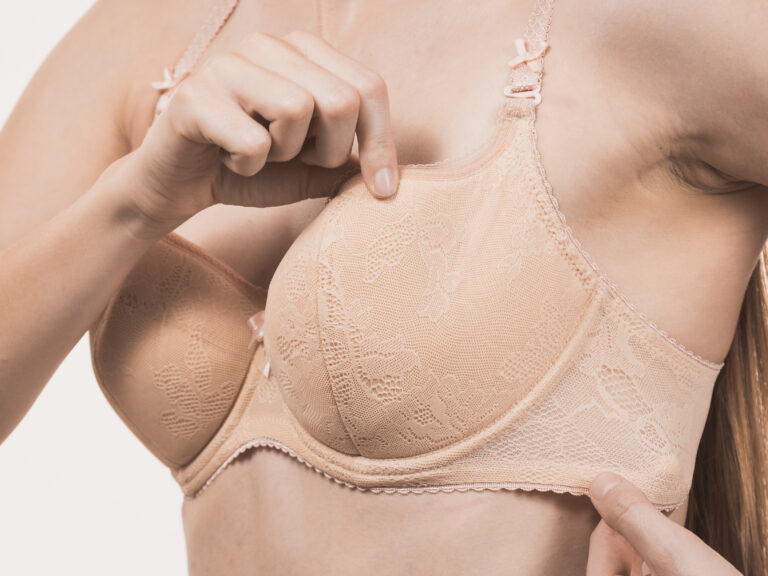
Cup gaping can happen for several reasons. The cup may be too large, the shape may not suit your bust, or the bra may be sitting incorrectly.
Many people assume gaping always means “too big”, but sometimes it simply means the style is not right for your shape. For example, a moulded T-shirt bra may gape if the cup shape does not match you well, even if the size seems close.
The fix may be a different cup style, a slightly different size, or a brand that suits your shape better.
Mistake 4: Accepting spillage as normal
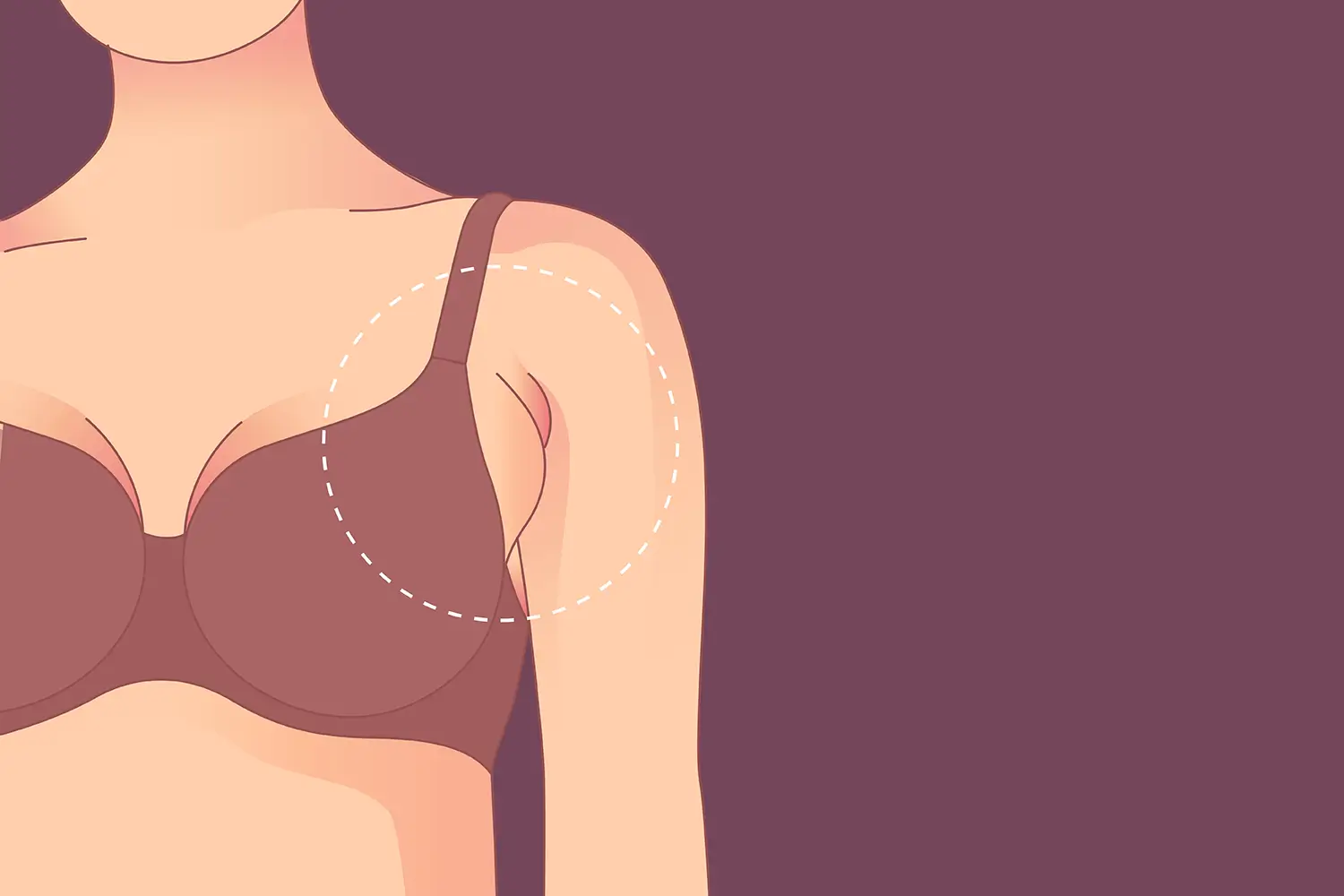
If you’re spilling out over the top, sides or under the arms, the cup is likely too small or the shape is not giving enough coverage. This can create lumps under clothing and make you feel like you are constantly rearranging things.
A good cup should hold the breast tissue smoothly and comfortably. You should feel contained, not compressed.
Mistake 5: Wearing the wrong style for your outfit
Sometimes the bra fits, but it does not suit the outfit. A textured lace bra under a smooth T-shirt may show. A high-centre bra under a V-neck may peek out. A regular bra under a strapless dress may lead to creative strap hiding, which rarely ends well.
Different outfits need different foundations. A few useful options include:
- T-shirt bras for smooth tops
- Plunge bras for lower necklines
- Strapless bras for shoulder-baring outfits
- Seam-free underwear for fitted clothing
- Minimiser bras for shirts or knits that pull across the bust
Your bra drawer does not need to be enormous, but it should have enough variety for the clothes you actually wear.
Mistake 6: Holding onto bras for too long
We all have that one bra. The old faithful. The one that has been through things. Unfortunately, bras do not last forever.
Over time, bands stretch, elastic weakens, straps lose hold and cups lose shape. If a bra used to fit well but now feels loose, unsupportive or uncomfortable, it may simply be worn out.
Rotating between a few everyday bras and washing them carefully can help them last longer. But if the band is stretched and the support is gone, it may be time to say a respectful goodbye.
Mistake 7: Assuming your size never changes
Bodies change. Weight changes, hormones, pregnancy, breastfeeding, surgery, menopause, ageing and lifestyle shifts can all affect bra size and shape.
Even if your weight has not changed much, your fit may still be different. That is why regular fittings are helpful. A check every 6–12 months is a good guide, or sooner if something feels off.
Mistake 8: Buying by size alone
Every brand fits differently. A 14D in one brand may not feel the same as a 14D in another. Cup shape, band firmness, wire width, fabric stretch and overall design all change the fit.
This is why trying on a few styles is so helpful. The goal is not to prove you are one exact size in every bra. The goal is to find what fits you best in that particular style.
Mistake 9: Choosing comfort or beauty, but not both
Many people think supportive bras are plain, or pretty bras are uncomfortable. Thankfully, that is not the case. With the right fitting advice, you can find bras that feel good, work hard and still look lovely.
Comfort does not mean giving up style. It means choosing pieces that suit your body properly.
Need help avoiding the guesswork?
If your bras are slipping, digging, gaping, riding up or just not feeling right, drop into Stephanie’s Bra Boutique in Warwick for a professional fitting. We will help you find the right size, style and brand for your shape – with practical advice, no pressure, and no “close enough” fitting.